
USFans Women Finds: Choose the Shape Before the Size Label
A women's clothing shortlist is most useful when it describes the fit you want, not just a row of attractive photographs. When browsing USFans spreadsheet finds, decide whether each piece needs to be fitted, straight, cropped, long or layered. Then compare the selected garment's measurements with something you already wear comfortably.
The category name does not determine fit. A listing labelled women's, men's or unisex can still have proportions that do not match your intended outfit. Treat those labels as browsing information, not a substitute for dimensions.
Start with one outfit decision
Choose a role for the piece: a top to tuck into trousers, a layer to wear over a knit, or a bottom with a particular rise and leg shape. That gives you a concrete reason to keep or reject a candidate.
For example, if your aim is a short top above a high waist, compare the top's actual length and the bottom's rise separately. A styled image may hide the waistband or show a garment tucked under itself. Do not infer the selected item's length from that arrangement alone.
The main USFans spreadsheet provides a starting selection; the best-spreadsheet guide explains how to compare the usefulness of the information attached to a find.
Choose measurements that answer the fit question
| Garment or feature | Compare | Clarify before selecting |
|---|---|---|
| Fitted or straight top | Chest width, shoulder and length | Whether the numbers describe the garment or a recommended body range. |
| Trousers or shorts | Waist, hip, rise and inseam | Whether the waistband was measured relaxed or stretched. |
| Outer layer | Chest, shoulder, sleeve and overall length | Whether the intended layers fit within those dimensions. |
| Skirt or dress candidate | Relevant waist, hip and length measurements | Where the measurement begins and whether lining or a slip is included. |
| Matching set | Each component independently | Whether one size applies to both pieces and what is included. |
Keep units and endpoints consistent. A flat garment width and a body circumference are not interchangeable numbers. If a measurement is unclear, resolve its method rather than choosing a size by an assumed conversion. The size guide covers this distinction in more detail.
Inspect details that change how the piece works
Look beyond the front photograph. Closures, lining, pocket placement, hem shape and adjustable parts can change whether the garment suits your plan. A front image may not show a back fastening or side opening. A displayed belt or inner top may be a separate purchase.
Treat fabric descriptions and visible appearance separately. A photograph can show texture under its lighting, but it cannot reliably establish opacity in every setting, stretch recovery or comfort against skin. Do not assume that a smooth-looking garment will behave like one you already own with a different material composition.
For coordinated pieces, use the sets guide rather than treating a model's full outfit as the confirmed package contents. For bottoms, the pants and shorts guide adds detail on rise and leg measurements.
Consider a general piece without inventing a women's-specific fit
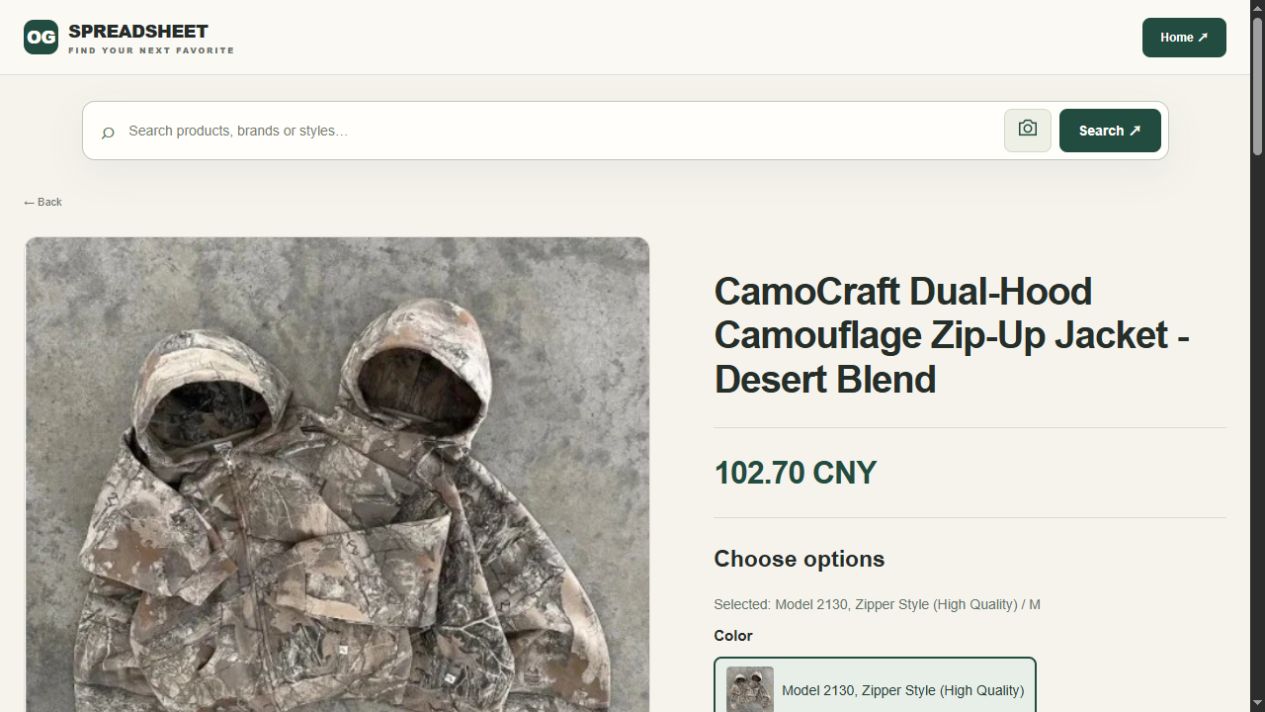
A jacket can be considered as an outfit component, but its listing must still provide dimensions that suit the wearer and layering plan. The OG reference below is a general jacket candidate, not a verified women's cut or a personal fit recommendation.
Save the exact colour and size alongside the product link. If you change an option later, update that reference rather than retaining measurements from the previous selection.
Review your own item before shipping
Compare the warehouse photographs with the selected option: labels, colour, visible fastening, quantity and condition. If length or width determines whether you can wear it, check whether the image actually shows the relevant measurement rather than merely placing a ruler somewhere nearby.
The QC photo guide explains the limits of a visible inspection. If an option is wrong, address it through the item's record before combining it into a parcel. Read the returns guide promptly; do not assume that every fit disappointment has the same remedy.
Common questions
Can I choose my usual letter size?
Use it only as a starting point. Compare the selected listing's measurement method and dimensions with a suitable garment you own.
Does unisex mean it will fit everyone?
No. It is a category description, not a guarantee of shape, length or proportion for a particular wearer.
Should every piece in my shortlist use the same size?
No. Select each garment according to its dimensions and intended fit. A set may also need separate component checks even when sold under one size option.
Can QC confirm that a garment will not be see-through?
Not in every lighting and wearing condition. A warehouse photograph is a limited view, not a comprehensive wear test.