
USFans Size Guide: Compare Measurements Before Choosing a Label
Choosing a size from a USFans spreadsheet starts with the exact product, not the letter you usually wear. A saved M or L tells you which option somebody selected; it does not establish how that garment compares with your own clothes. Use the listing's measurements and your preferred fit to decide what needs checking.
Keep the product destination, variation and relevant dimensions together. If you move to another listing, start the comparison again rather than carrying the previous size decision across automatically.
Decide what a successful fit means
Name the fit requirement before studying the chart. For a jacket, you might need room for a sweater underneath while keeping the sleeves manageable. For trousers, the critical issue might be the rise and length rather than the waistband alone.
Choose a reference garment you already wear for a similar purpose. A close-fitting summer shirt is a poor reference for the amount of room you want in a winter layer. The reference should help explain your preference, not simply supply a number.
Establish what the chart is measuring
Check whether the numbers describe the body, the finished garment or a recommended range. Do not compare them as if they were interchangeable. Also identify the units and the measurement endpoints shown in any diagram.
| Detail | Question to settle |
|---|---|
| Chest or bust | Is this a body measurement, garment circumference or flat width? |
| Length | Where does the measurement start and end? |
| Sleeve | Is the stated length measured from the shoulder or another point? |
| Waist | Is the garment relaxed, stretched or represented by a recommended body range? |
| Footwear | Which size system and product-specific dimensions are being used? |
If the label is ambiguous, ask for clarification. A column headed chest is not enough to establish whether a listed number is flat width or circumference.
Compare like with like
Use the same units and method for your reference and the candidate. One inch equals 2.54 centimetres, but converting units does not fix a difference in measurement endpoints. A correctly converted sleeve number can still describe a different method.
Here is a hypothetical comparison: if your reference garment has a flat width of 54 cm and the candidate is measured the same way at 52 cm, the candidate is 2 cm narrower in that measurement. This does not predict comfort or prove that the size is wrong. It identifies a difference to consider alongside fabric, cut and your intended layering.
Do not double a number unless you know that you are converting the relevant flat width into a corresponding circumference. Avoid treating an unclear chart as a puzzle that must be solved by guessing.
Work through a jacket option
For a jacket, compare the chest room, garment length and sleeve measurement that matter to you. Check the fastening and the intended layer underneath. Then confirm that the size selected on the product page is the option whose chart you used.
Inspect the jacket candidate on OG
This is an example to examine, not a size recommendation. No measurement for this candidate is supplied by the hypothetical example above. Do not assume a fit or material property from the product title.
Use the jacket guide for garment-specific comparisons and retain the chosen option through the spreadsheet links guide.
Treat sets and different categories separately
A matching top and bottom may not suit you in the same labelled size. Compare both pieces, check what is included and find out whether the available option fixes their sizes together. A good top measurement does not settle the trousers.
For shoes, use information for the exact model and size system. A clothing-size decision cannot help with shoe length or shape, and a familiar brand name does not remove the need to inspect the selected model. See the shoe guide for the relevant comparison questions.
For children's clothing, do not infer suitability from an adult conversion or an age label alone. Look for the measurements and product details relevant to the intended wearer. Avoid applying one universal conversion rule across unrelated categories.
Use warehouse measurements to answer a specific question
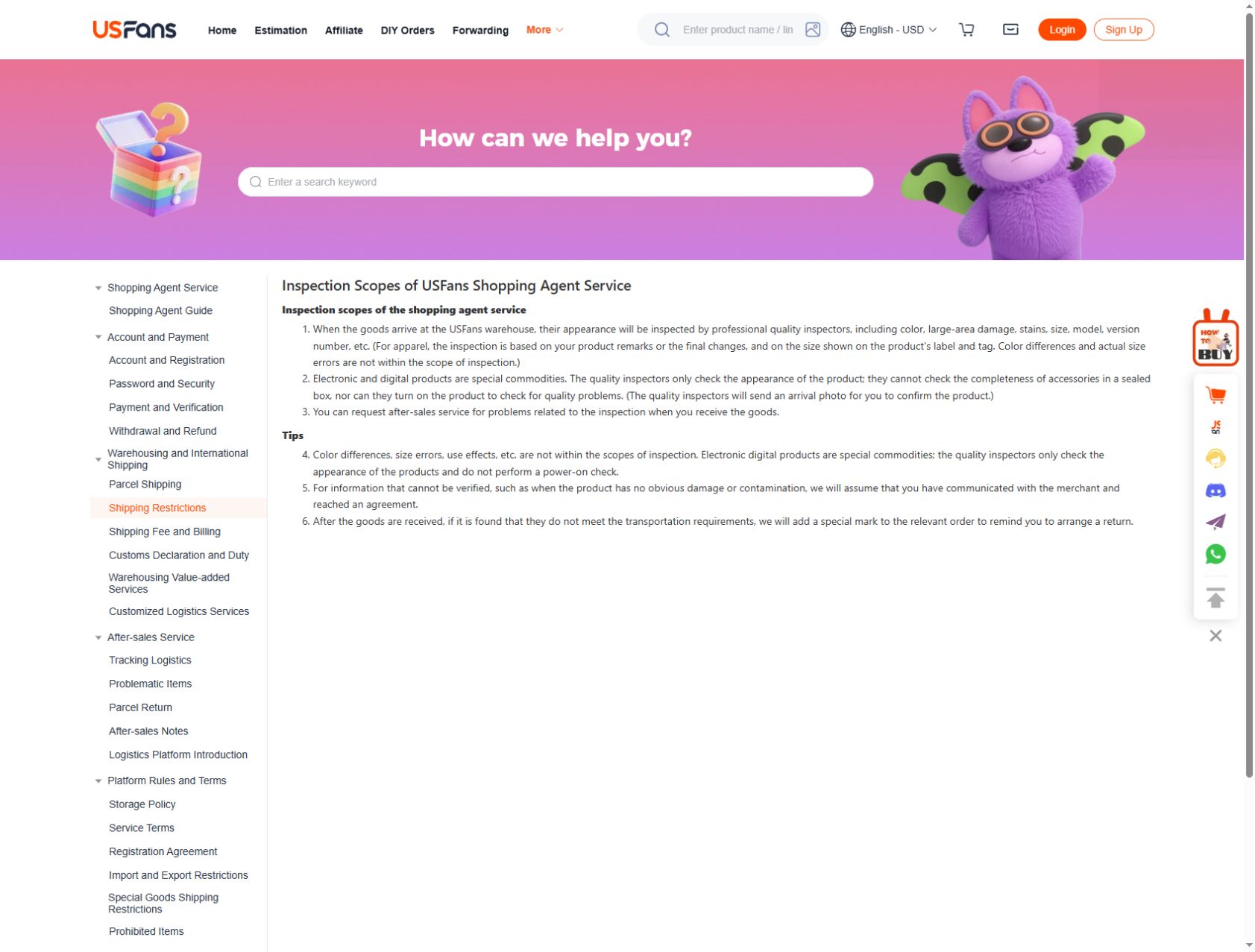
USFans' inspection scope, checked on 30 September 2026, describes checking the size shown on apparel labels rather than confirming actual garment dimensions. A matching label therefore does not settle the sleeve length or layering room you need from a jacket. Identify the dimension that still needs a separate check.
If order-specific photos or measurements are available, first match them to the correct item and variation. Ask for the dimension that would change your decision rather than requesting more photos without a clear purpose.
A useful measuring image makes the relevant endpoints and scale readable. An angled or partly hidden tape can leave the number uncertain. Do not treat a blurred image as precise confirmation merely because a ruler appears somewhere in it.
The QC guide explains the limits of visual inspection. Photos can help with visible details and measurements, but they do not reproduce wearing the garment or establish how it will behave after use.
Resolve a mismatch before the next commitment
If the selected label differs from the request, or a relevant dimension differs from what you expected, describe that exact issue to support. Distinguish a wrong option from an option that matches the order but may not fit your preference.
Check the applicable return conditions while the item is at the relevant stage. Do not assume a size concern guarantees a return, exchange or refund. The buying guide helps keep this decision separate from international parcel submission.
Should I always size up?
No universal rule can replace the exact chart and fit comparison. A larger label may change several dimensions, not just the one you wanted to adjust.
Is another buyer's height enough to choose my size?
No. Their proportions, preferred fit and selected product may differ. Use their experience as context rather than a substitute for your own comparison.
What should I save in the spreadsheet?
Save the product, selected variation, measurement method, relevant dimensions and the question you resolved. Return to the USFans spreadsheet to keep that decision with the candidate instead of relying on memory.