
USFans Reviews: Compare Reports Without Counting the Same Experience Twice
Reading more USFans reviews helps only if the additional reports answer your question. Ten reposts of one parcel are still one parcel. An app complaint, a photograph of a garment and a successful delivery describe different parts of a purchase; combining them into a single verdict can hide the detail you need most.
Start with your next decision. If you are choosing a collection, read the USFans spreadsheet review. If you are deciding whether a delivery estimate or a quality claim deserves confidence, compare accounts of that particular stage. The aim is not to find enough positive comments to cancel the negative ones. It is to understand which observations apply to your purchase.
Sort reviews by what actually happened
An account of browsing the app can tell you about that person's browsing experience. It cannot establish how an international parcel arrived. Likewise, a warehouse photograph may show an item before dispatch without establishing its condition after delivery or how it performs when worn.
Give each report a simple description: browsing, payment, warehouse inspection, dispatch, delivery, use or complaint resolution. A report can cover several stages, but it should say how it reached each one. “Everything was fine” after registration is a different observation from the same sentence after receiving and checking an order.
This distinction matters in the app-store comments too. In a Polish-language Google Play listing viewed on 23 September 2026, a comment dated 15 September described loading trouble while explicitly saying the writer had not ordered. Another, dated 4 September, complained about later parcel charges. These are reports by users, not independently established causes. The listing's region was United States with Polish display language: neither comment establishes a Poland-only delivery result.
The first report may be relevant to app usability; the second raises a cost question. Neither alone measures the quality of a product you are considering.
Identify independent experiences, not independent web pages
Look for signs that several posts originate from one case: the same unusual wording, the same cropped photograph, the same package dimensions or a matching sequence of updates. These are reasons to investigate duplication, not grounds to accuse an author of dishonesty. A buyer may legitimately share one experience in several communities.
Count that experience once when judging how many examples you have. Keep a later update attached to it. If a missing parcel was subsequently delivered, the initial delay and eventual delivery both belong in the account. Treating the two posts as separate customers exaggerates the available experience and loses the outcome.
Do not request public order numbers, addresses or payment details to prove independence. A reviewer can explain dates, stages and amounts without exposing identifying records. The community guide covers asking narrower questions without sharing private account information.
Compare delivery reports on the same clock
“Twelve days” is incomplete without a start and end event. It might mean payment to warehouse arrival, international dispatch to delivery, or the whole order. Before using that figure, identify the destination, shipping service if stated, parcel stage and approximate period of the experience.
Two reports can both be accurate yet unsuitable for comparison. A small parcel on one service does not predict the timing of a heavier parcel on another. If the service is not identified, use the report as a description of that buyer's experience rather than as your delivery estimate.
For a parcel already in transit, the tracking guide is more useful than a general rating. Compare the actual event wording with the question you need answered; a created tracking number and a recorded carrier handover are not interchangeable milestones.
Separate a cost surprise from its explanation
A complaint about an unexpected charge is worth investigating. To understand it, distinguish the product payment, domestic movement, international parcel charge and any other identified line item. A screenshot of a total without the relevant stage or currency leaves too much open.
Ask what changed between the earlier figure and the later one. Was the first amount an estimate? Did the package or selected service change? Does the author identify the disputed line? These questions do not excuse an unexplained charge; they make the complaint useful to someone making the same decision.
Use the payment guide to organise the stages and the shipping calculator guide to interpret estimate inputs. Do not average several unrelated totals and call the result a price for your own parcel.
Check whether a product review matches your option
A positive report about a shirt does not automatically cover every shirt sold under a similar name. Compare the selected version, colour, size and the particular feature being praised. A photograph can support a visible detail, but not necessarily fabric composition, long-term durability or authenticity.
For example, if you want a T-shirt, begin with the actual candidate rather than borrowing a verdict from a different listing.
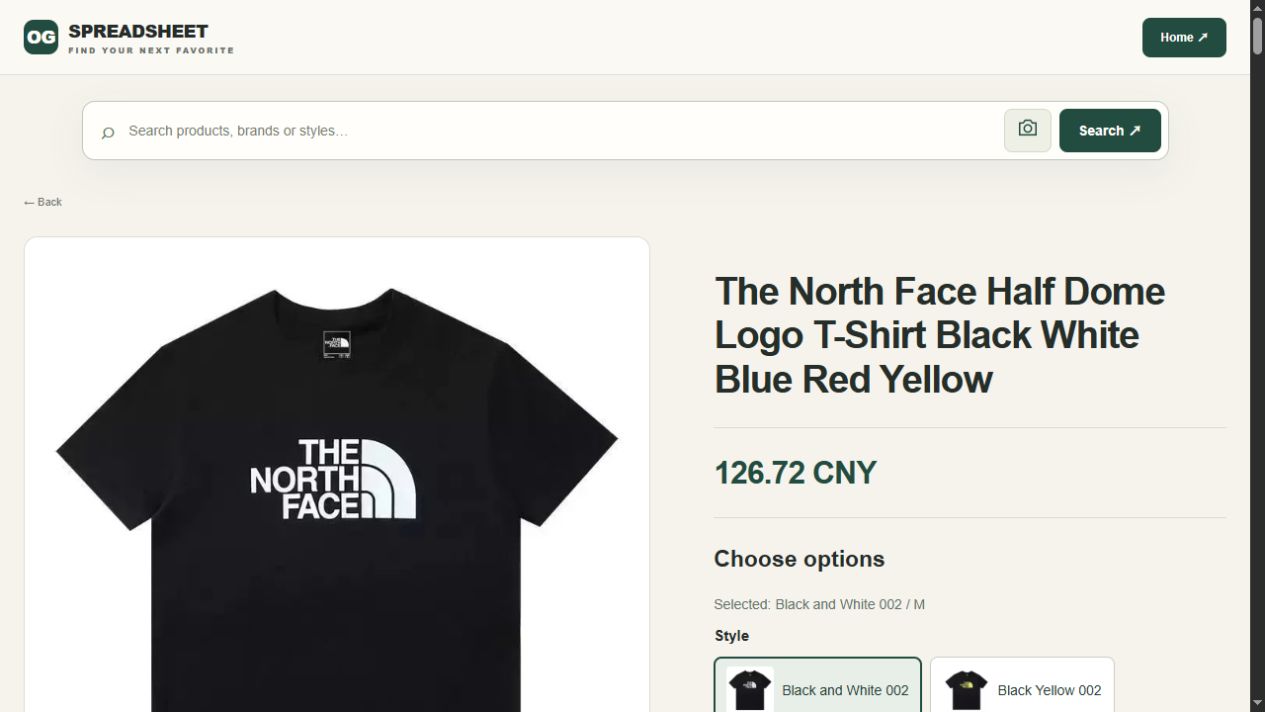
Inspect the T-shirt candidate on OG
Check whether the listing and selected option match what you intend to buy. This is a product to examine, not an item tested for this article. The T-shirt guide helps turn a general recommendation into fit and detail questions; the QC guide explains what photographs can and cannot settle.
Make a bounded decision from mixed feedback
When reports disagree, write down the disagreement precisely. “One account reports a late parcel; another reports timely delivery” is more useful than choosing a universal label. Check whether they describe comparable destinations, services and periods before treating them as contradictory evidence.
You may learn enough to proceed with one decision while leaving another unresolved. Useful product photographs do not resolve a payment concern. A responsive conversation does not prove that a refund arrived. For a complaint, distinguish contact, a proposed remedy and a completed remedy.
If the evidence does not answer the issue that would change your decision, obtain that answer before committing more money. The purchase guide provides the sequence, while the safety guide focuses on account and transaction checks.
Common questions
Do repeated complaints prove how often a problem occurs?
They identify a pattern to examine, but a set of public posts does not provide a complete count of all comparable orders. Remove obvious reposts and retain the context; do not turn the remainder into an incident percentage without a valid denominator.
Is a verified purchase label enough?
Check what the host means by that label. Even where it confirms a transaction, it does not by itself verify every statement, prove long-term use or show that your selected option is identical.
Should an older review be ignored?
Not automatically. It can explain an earlier experience, especially when it includes a resolution. Its relevance to a current purchase depends on whether the service, item and conditions still match. Keep the date attached instead of presenting an old case as a current guarantee.