
USFans Shipping: Choose a Parcel Plan Before Choosing a Route
The first USFans shipping decision is what you intend to send. A route comparison is premature if some items are still unresolved, the packaging plan is unclear or the contents may require different acceptance conditions. Build a realistic parcel plan, then compare the eligible services for that plan.
The general shipping guide explains the wider process. Here, the focus is deciding whether to wait, combine items or compare separate parcels without assuming that the largest shipment gives the best result.
Sort ready items from unresolved items
Check each intended item against its warehouse record. Is the selected option correct? Have you reviewed the relevant photographs? Is there a question about damage, quantity or a return that still needs an answer?
Do not allow a nearly complete haul to rush a decision about one wrong item. Conversely, do not assume that waiting indefinitely for a final purchase has no consequences for goods already stored. Review the applicable warehouse conditions and address item issues through their own records.
A ready product and an accepted outgoing parcel are not the same thing. The contents still need to be suitable for the destination and proposed service.
Compare plans, not slogans about consolidation
Consider a hypothetical shortlist containing shoes, a knit and a jacket. One plan is to send the ready items together; another is to send a time-sensitive item separately. Neither plan is automatically cheaper or faster overall. Their packed dimensions, chargeable-weight rules, service scope and preparation timing may differ.
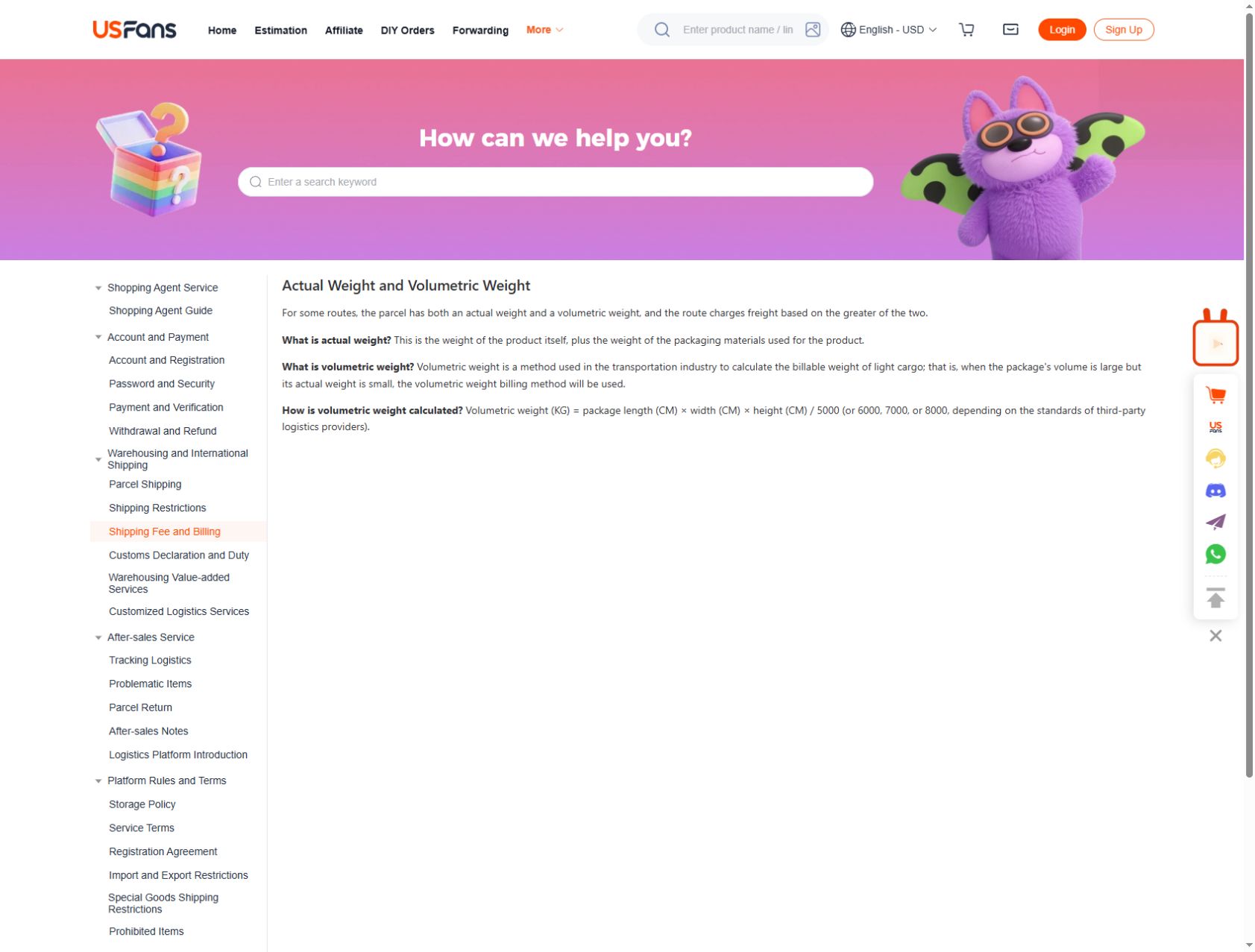
USFans' published weight explanation describes routes that compare packed actual weight with volumetric weight. That is why simply adding product weights can miss an important part of a combined parcel's charging basis. Use the current rule for the route under consideration, not an assumed universal divisor.
| Plan | What to compare before deciding |
|---|---|
| One combined parcel | Accepted contents, realistic outer dimensions, total charge and readiness of all included items. |
| Separate parcels | Each parcel's individual charges, packing requirements and timing—not one quote divided in half. |
| Wait for another item | The expected benefit of combining it, applicable storage conditions and any unresolved purchasing issue. |
| Change packaging | Protection retained, actual dimensions after the change and whether the route still accepts the parcel. |
The quote-comparison guide explains how to keep those comparisons consistent. Do not take the dimensions from one plan and the weight from another to create a result that no actual package would match.
Preserve protection that serves a purpose
Separate presentation packaging from protection, but do not assume you know which is doing which from a product thumbnail. Shoes, structured accessories and fragile items have different packing needs. Ask what a proposed removal or repacking choice actually changes.
A smaller estimate is not sufficient reason to accept an unsuitable package. If you change the packing plan, use the updated measurements and conditions in the next comparison. A previous quote should remain attached to the plan it originally described.
Keep the destination and contents accurate
Check the delivery details and any requested area information carefully. The availability shown for another country or postal area does not establish availability for yours. Items with specific acceptance questions need to be checked as those items, rather than described as generic clothing to obtain a route.
Do not hide or misdescribe contents to make a shipment appear eligible. If the service cannot accept an item, ask about legitimate alternatives before committing to a plan.
Separate your shopping choice from the shipping estimate
A jacket candidate can help you decide what you want to wear. Its product page cannot establish the packed dimensions of a future parcel with shoes and other layers inside it.
Inspect the jacket candidate on OG
Save the selected option in your spreadsheet links, then return to the parcel comparison when the actual contents and packaging are clear. Do not present a clothing listing as shipping evidence.
Review the final plan before submission
Confirm which items are included, the destination, the service and what the quoted amount covers. Treat optional services as separate decisions with their own terms. If a price or condition changes, compare it with the same inputs rather than assuming the new result is an error.
Once submitted, preserve the parcel reference. Follow tracking for carrier events rather than reading shipment progress from product-order status. The delivery-time guide helps distinguish preparation from transit; neither this article nor a generic estimate promises an arrival date.
Common questions
Is one large parcel always cheaper than two smaller ones?
No. Compare realistic eligible plans and their complete quoted scope. Dimensions and service rules can change the result.
Should I wait for every item before shipping anything?
Compare the reasons to wait with readiness, storage conditions and your needs. A uniform rule does not fit every set of purchases.
Does removing a box guarantee a saving?
No. The resulting packed measurements and charging rules determine whether the price changes, and protection still matters.
Can I use another buyer's haul total as my shipping budget?
Use it only as a bounded example with clear contents and context. Your own parcel needs its own estimate and acceptance checks.